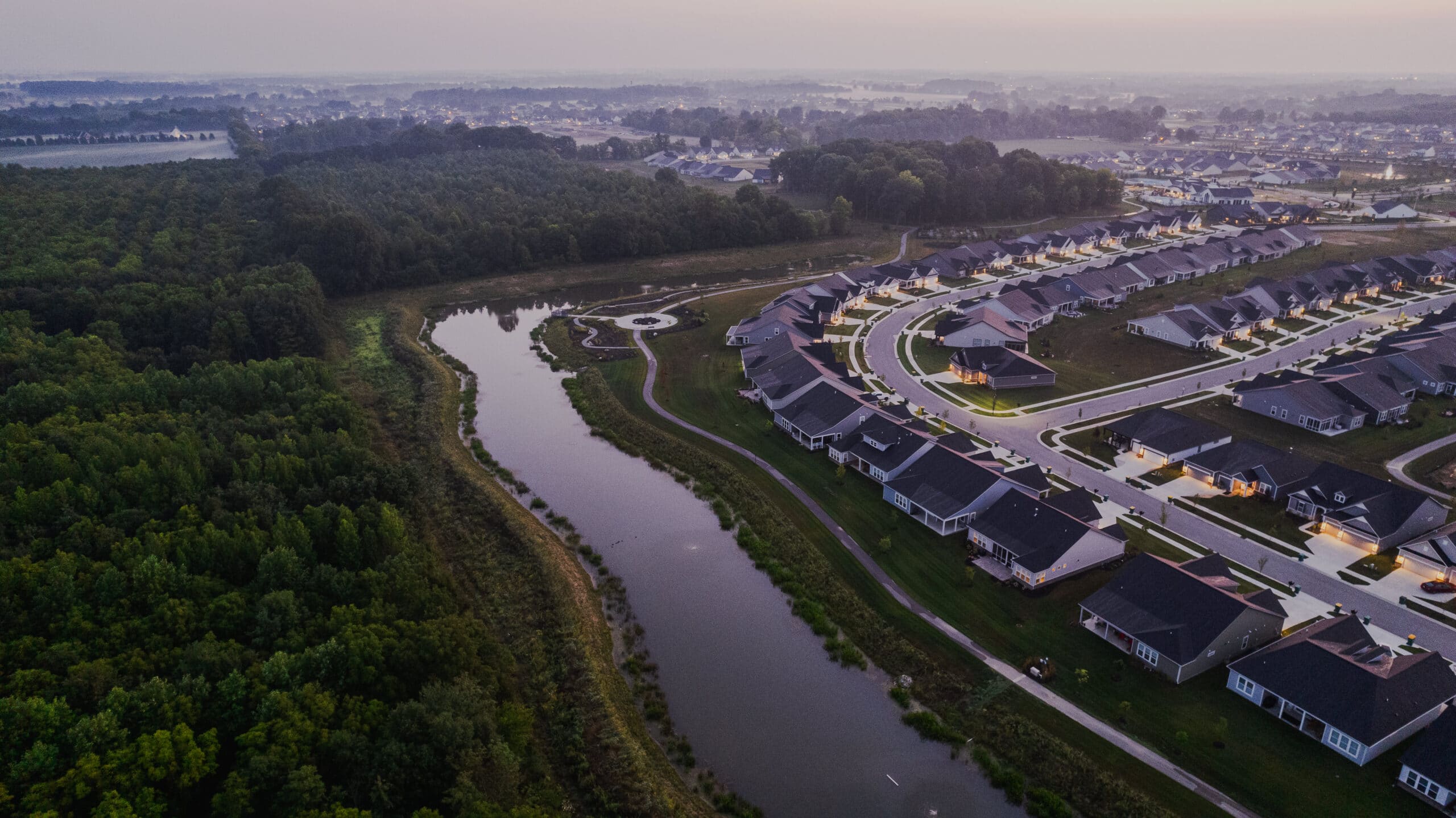
The Jeffersonville Transmission Line project was a large-scale transmission line expansion aimed at improving grid reliability and efficiency across a rapidly developing area. Williams Creek Management played a crucial role in environmental compliance, site preparation, and strategic landowner coordination to ensure the project’s success.
Spanning four miles, the project involved the installation of a brand-new transmission line extending from an existing substation and integrating into the broader energy grid. The route crossed sensitive wetland areas and regions experiencing significant commercial and residential development, requiring a careful approach to environmental protection and access planning. Williams Creek implemented erosion control measures, temporary access roads, and matting installations to support construction while minimizing disturbances to wetlands and surrounding properties.
Given the complexity of the landscape and the number of stakeholders involved, landowner coordination was a critical component of the project. Williams Creek worked closely with property owners to address concerns, secure necessary access agreements, and ensure that construction activities were conducted with minimal impact on private land.
Access planning was another major focus, as the project required carefully designed routes through wetlands and active development zones. Williams Creek developed a strategic access plan to optimize construction efficiency while protecting environmentally sensitive areas. This included the use of specialized matting solutions to stabilize wetland crossings and prevent soil disruption.
The success of this project highlighted Williams Creek’s expertise in balancing large-scale infrastructure development with environmental stewardship and community engagement. By effectively managing landowner relationships and implementing a well-coordinated access strategy, Williams Creek played a key role in ensuring the seamless execution of this client’s transmission line expansion.