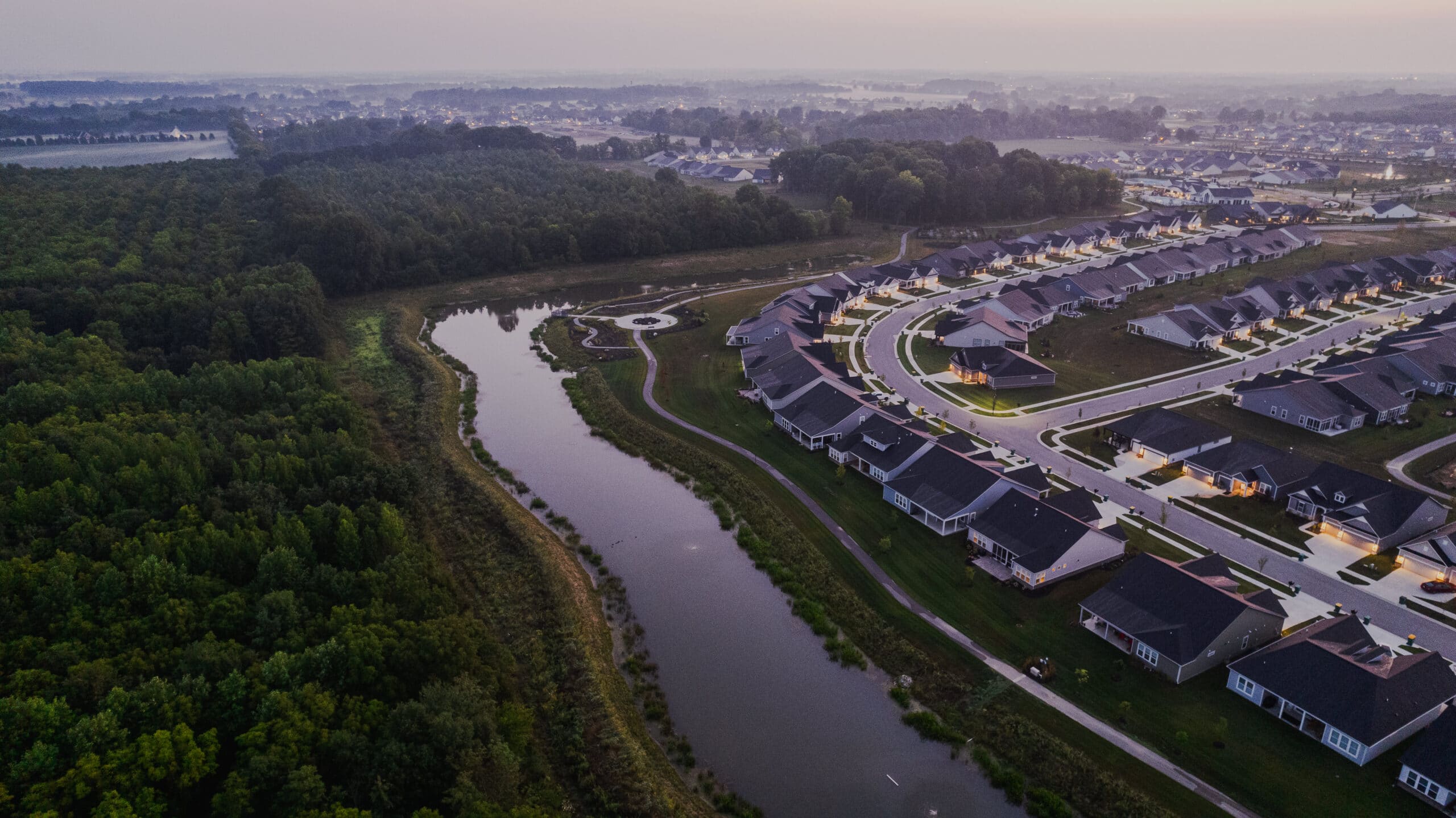
In the heart of an industrial landscape, where concrete and asphalt once dominated the scene, the Innovation Drive at Park 100 project emerged as a beacon of urban ecological restoration. Williams Creek Management took on the restoration and relocation of approximately 500 feet of degraded urban stream. This challenging project also included re-establishing the urban tree canopy, offering significant potential for revitalization.
A particularly unique aspect of this stream relocation project was the Heritage Tree mitigation, which involved the careful planting of 762 large canopy trees along the new stream corridor to restore the ecological balance of the area. Most of the trees were planted on 3:1 slopes, and to date, the survivability rate of these trees has exceeded 90%—a statistic that speaks volumes about the diligence and expertise applied throughout the project. As our team continued to develop the area, an urban tree rooftop began to take shape along the corridor, serving as a refuge for local wildlife but also providing a unique ecology site for future studies.
While the project began with a critical focus on the relocation of an existing urban stream, it quickly grew into Williams Creek working to ensure proper drainage throughout the site. Through careful planning and execution, the team implemented a Green Infrastructure retrofit for stormwater management, transforming the urban landscape into a model for future projects. At the core of the project was a large stormwater basin, strategically positioned to manage several acres of runoff through the integration of low impact, decentralized stormwater management systems and sustainable landscaping throughout the perimeter of the post-development site.
The Innovation Drive at Park 100 project stands not only as a triumph of ecological engineering and environmental stewardship but also as a testament to what can be achieved when communities come together with a shared vision for a more resilient urban future.