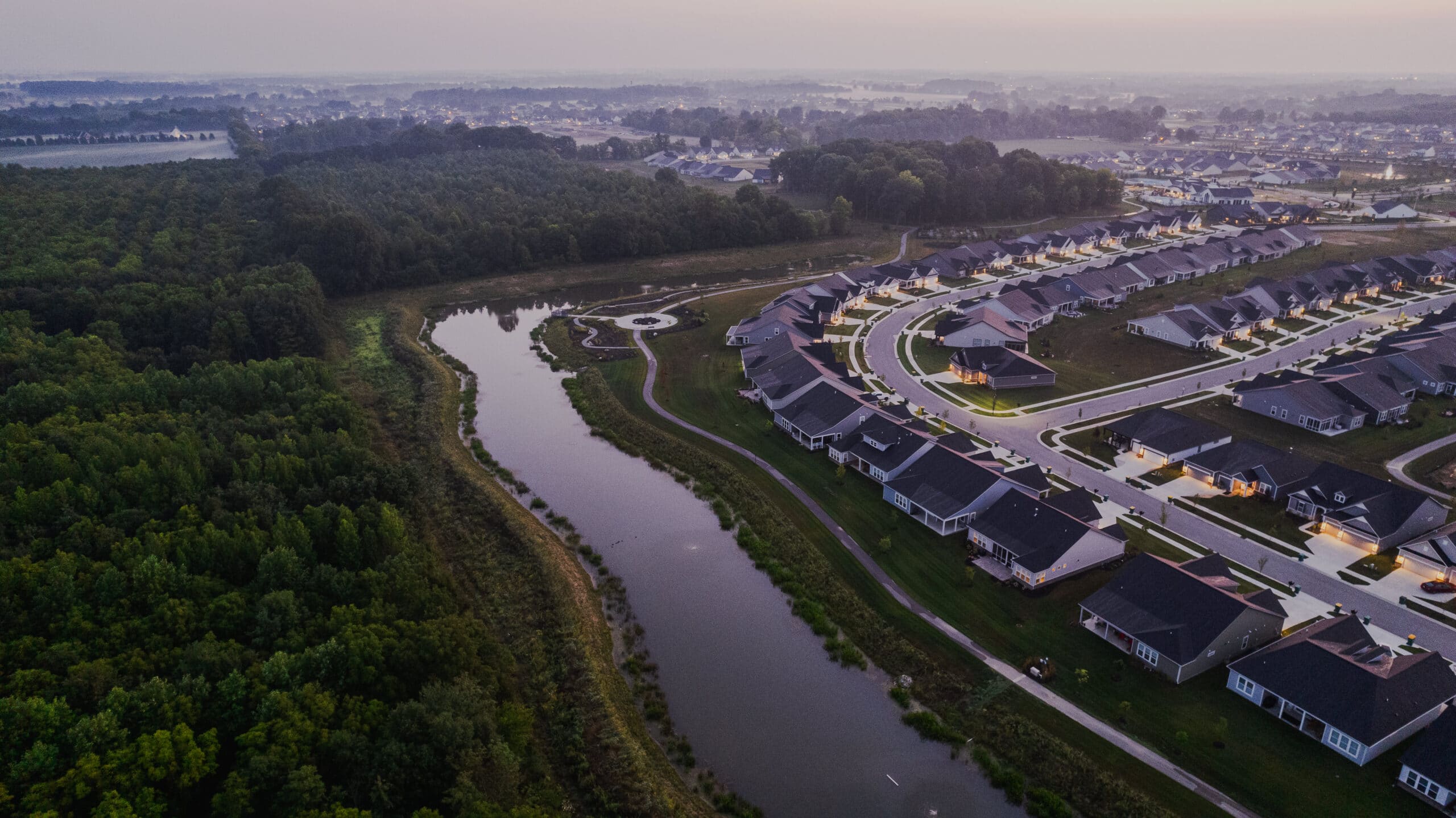
Lake Santee, a beloved recreational destination in Indiana, faced recurring challenges with sediment accumulation, impacting water quality and recreational enjoyment. To address this issue, Williams Creek Management was contracted to construct a sediment basin combined with a constructed wetland, along with providing bank stabilization along a significant reach of stream as a strategic intervention designed to protect the lake's pristine waters.
The project involved the construction of a 1.5-acre sediment basin combined with a constructed wetland, carefully engineered to intercept and capture sediment before it enters the lake. This innovative approach reduces turbidity, improves water clarity, and enhances the overall health of the lake ecosystem. In addition to the sediment basin, the Williams Creek Team constructed 2,000 linear feet of bank stabilization measures, further reducing erosion and protecting the shoreline limiting future degradation of lake water quality. These combined efforts ensure that Lake Santee remains a recreational gem for years to come.
The Lake Santee sediment basin and constructed wetland now intercepts a significant portion of the annual sediment load while the complimentary bank stabilization helps in reducing the frequency and cost of dredging. This proactive approach improves water clarity, enhances the lake's aesthetic appeal, and protects its delicate ecosystem. The Lake Santee Natural Resource Restoration Project's success serves as a model for other Indiana lakes facing similar sedimentation challenges, demonstrating the effectiveness of innovative sediment control and water quality improvements measures in preserving valuable recreational resources and promoting community well-being.